
Best External Sunvisors for 4WD Touring Rigs
Table of Contents
Best External Sunvisors for 4WD Touring Rigs: What to Look For
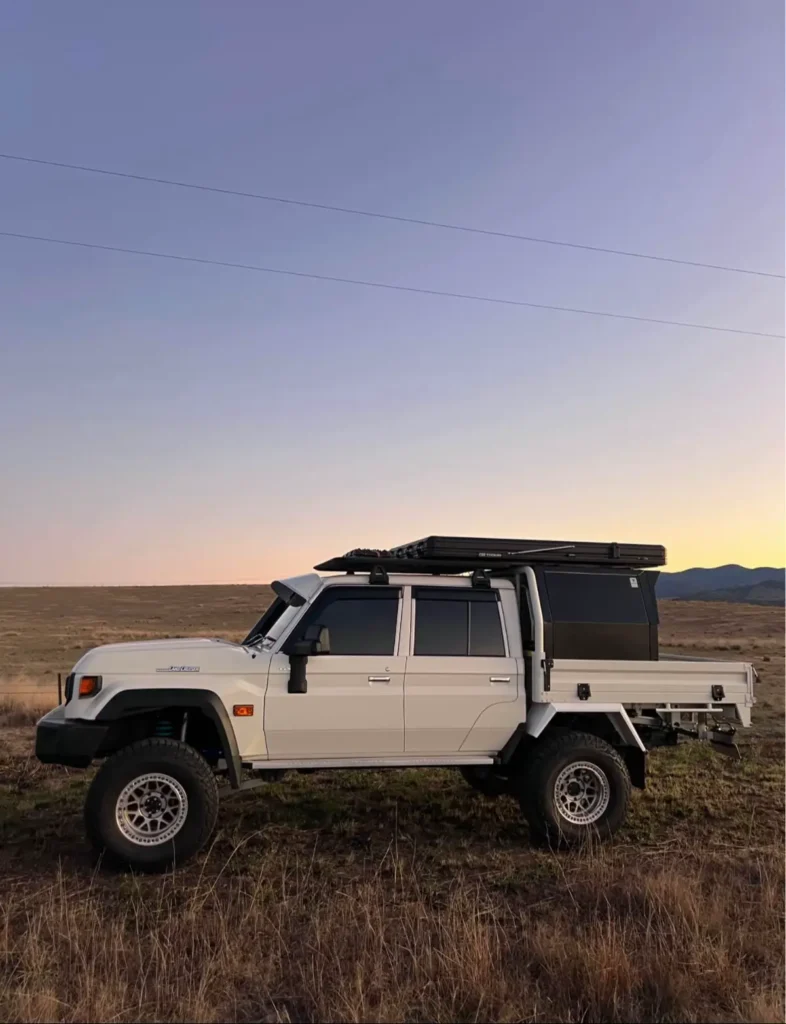
A well-equipped 4WD touring rig is built for more than getting from A to B. Whether you are crossing long stretches of highway, travelling through remote country, heading to the coast or exploring dirt tracks, every accessory needs to earn its place.
An external sunvisor is one accessory that can offer both practical and visual benefits.
Mounted above the windscreen, an external windscreen sunvisor can help reduce direct sunlight and glare while adding a distinctive touring and off-road appearance to the vehicle. Unlike a temporary interior windscreen shade, it stays fitted to the vehicle and is available whenever you are driving.
But what actually makes the best external sunvisors for 4WD touring rigs?
The answer is not simply the biggest visor or the most expensive one. The right choice depends on vehicle fitment, construction, visibility, mounting, driving conditions and the overall setup of your 4WD.
In this guide, we explain what to look for when choosing an external sunvisor for a touring rig and how to decide which style is right for your vehicle.
Why Fit an External Sunvisor to a 4WD?
4WD touring can involve long hours behind the wheel, often in bright and exposed conditions.
Sunlight can enter through the upper section of the windscreen, creating glare and making the driving environment less comfortable. An external sunvisor creates additional shade above the windscreen and can help reduce the amount of direct sunlight reaching the cabin.
A 4WD sunvisor can also complement other touring accessories.
Depending on the vehicle, you may already have:
- A roof rack
- Awning
- Snorkel
- Bull bar
- Driving lights
- UHF antenna
- Canopy
- Recovery equipment
- Rear drawers
- Spare-wheel carrier
An external sunvisor can become part of the overall exterior design rather than looking like an accessory added as an afterthought.
What Makes the Best External Sunvisor for a Touring Rig?
There are several factors worth considering before buying.
The best external sunvisor for your 4WD should ideally provide:
- Correct vehicle-specific fitment
- Effective shade and glare reduction
- Secure mounting
- Suitable construction
- Adequate clearance around existing accessories
- A design that suits the vehicle
- Compatibility with your touring setup
Let’s look at each one.
1. Vehicle-Specific Fitment Comes First
The first rule when choosing a 4WD windscreen sunvisor is simple: make sure it is designed for your vehicle.
Windscreen dimensions, roof profiles, mounting locations and A-pillar shapes can vary significantly between vehicles.
A visor that fits one 4WD may not fit another, even if both vehicles appear similar.
This is especially important for touring rigs because they often have additional equipment mounted around the roof and windscreen area.
Before ordering, check:
- Make
- Model
- Year
- Generation
- Body style
- Cab configuration
- Existing roof accessories
- Snorkel location
- Roof rack configuration
A good example is the importance of vehicle-specific design. The aftermarket 4WD market includes purpose-built visors for particular applications rather than relying entirely on universal designs.
At Visor Investments, our range is focused on vehicle-specific windscreen sunvisors, allowing owners to select products designed around particular vehicle applications.
2. Glare Reduction for Long-Distance Touring
One of the biggest reasons to install an external sunvisor is to make bright driving conditions more comfortable.
Long-distance touring can mean spending several hours behind the wheel with the sun repeatedly moving across your field of view.
An external visor can provide additional shade across the upper portion of the windscreen.
This can be particularly useful during:
- Sunrise
- Sunset
- Long highway drives
- Open-country travel
- Desert travel
- Coastal touring
- Bright summer conditions
A 4WD accessory test published by 4X4 Australia found that an external mesh visor reduced glare and made dashboard instrumentation easier to see during testing. The same test also noted a reduction in perceived cabin heat, while pointing out that airflow noise can vary depending on the vehicle and application.
This illustrates an important point: the benefits of a visor are not purely cosmetic.
3. Mesh vs Solid for a 4WD Touring Rig
One of the biggest choices is whether to choose a mesh or solid external sunvisor.
Mesh sunvisors
Mesh construction allows air and some light to pass through the visor.
This creates a balance between shade, airflow and visibility.
Mesh can be particularly attractive for touring vehicles because it has a lighter visual appearance and suits the traditional 4WD aesthetic.
A mesh visor may be a good choice if you want:
- Diffused sunlight
- Reduced glare
- Airflow through the visor
- A traditional touring appearance
- A lighter-looking accessory
Our Ford Courier 1999–2006 Mesh Windscreen Sunvisor is an example of a vehicle-specific mesh design.
Solid sunvisors
Solid sunvisors use a more continuous panel and therefore provide a stronger visual barrier against direct sunlight.
They can create a more substantial appearance and are particularly popular with drivers who want a bold exterior finish.
A solid visor may be better suited to your touring rig if you prioritise:
- Strong sunlight blocking
- A bold appearance
- More substantial visual coverage
- A clean, solid exterior design
For a detailed comparison, see our guide: Solid vs Mesh Windscreen Sunvisors: Which Is Right for Your Vehicle?.
4. Consider Your Other Touring Accessories
A touring 4WD rarely has a completely standard roof and windscreen area.
You may have installed a snorkel, roof rack, light bar or other equipment.
That means clearance is important.
A sunvisor should not interfere with other accessories, and existing accessories should not prevent the visor from being installed correctly.
This is particularly important around:
- Snorkels
- Roof racks
- Cab-mounted accessories
- Aerials
- Driving lights
- Light bars
- Canopies
- Roof-mounted camping equipment
Some aftermarket visor suppliers specifically offer custom fitments around accessories such as snorkels, demonstrating why checking the complete vehicle configuration before ordering is important.
Before purchasing, identify everything already mounted around the roof and windscreen area.
5. Construction Matters on Touring Vehicles
A touring rig can experience conditions that a normal city vehicle may rarely encounter.
Your vehicle may spend days on corrugated roads, gravel, dirt tracks and highways.
That means an external accessory should be properly secured and suitable for its intended application.
When comparing external sunvisors, consider:
- Material
- Mounting hardware
- Bracket design
- Finish
- Overall weight
- Vehicle-specific construction
- Installation requirements
A good sunvisor should not simply look right when the vehicle is parked.
It needs to be properly mounted and maintained.
6. Think About Highway and Off-Road Use
4WD touring usually combines different types of driving.
One day you might be travelling at highway speeds. The next you could be driving on corrugated gravel roads.
This makes secure mounting particularly important.
An external sunvisor is exposed to airflow, vibration and environmental conditions, so installation quality matters.
Always follow the manufacturer’s fitting instructions and inspect mounting hardware periodically, especially after extended touring.
If your vehicle has experienced significant vibration, impacts or modifications around the roof and windscreen, it is sensible to inspect the visor and its mounting points before a major trip.
7. Does a Sunvisor Make a 4WD Cooler?
It can help reduce direct sunlight entering through the upper portion of the windscreen, but expectations should remain realistic.
An external sunvisor is not an air-conditioning system.
It does not prevent all heat from entering the cabin because sunlight can still enter through other windows and surfaces.
For a parked 4WD, a dedicated interior windscreen shade can provide broader coverage of the windscreen.
For driving, however, an external visor has an important advantage: it remains fitted while the vehicle is moving.
This makes it particularly useful for touring.
If you are interested in the difference between the two, read our guide to External Sunvisor vs Interior Sunshade.
8. Appearance Matters on a Touring Rig
There is nothing wrong with admitting that appearance matters.
A touring 4WD is often a personal project as much as it is a practical vehicle.
Owners spend considerable time choosing:
- Wheels
- Tyres
- Bull bars
- Suspension
- Roof racks
- Awnings
- Canopies
- Lighting
- Recovery equipment
An external sunvisor can contribute to that overall appearance.
Mesh tends to provide a traditional, practical look, while solid designs can create a more substantial and modern appearance.
The best option is ultimately the one that fits the visual character of your vehicle.
Best External Sunvisor Features at a Glance
| Feature | Why It Matters for Touring |
|---|---|
| Vehicle-specific fit | Helps ensure correct installation |
| Secure brackets | Important for highway and corrugated-road use |
| Mesh construction | Good balance of shade and airflow |
| Solid construction | Strong sunlight blocking and bold appearance |
| Accessory clearance | Prevents conflicts with snorkels and roof equipment |
| Quality finish | Important for long-term exterior appearance |
| Correct mounting | Essential for safe and reliable use |
| Suitable design | Complements the overall touring build |
Are External Sunvisors Worth It for 4WD Touring?
For the right driver, yes.
An external sunvisor is particularly appealing if you spend a lot of time touring in bright conditions and want a permanent accessory that can provide additional shade while driving.
It can also make sense if you are building a classic or expedition-style 4WD and want an accessory that contributes to the overall look.
However, it is not an essential piece of recovery or safety equipment.
If your budget is limited, prioritise critical touring equipment first.
A sunvisor should be considered a comfort and styling upgrade rather than a substitute for tyres, recovery equipment, communication equipment or other essential touring gear.
What About Interior Sunshades?
An interior sunshade still has a role in a touring vehicle.
In fact, the two products can complement each other.
An external visor is useful when driving, while an interior windscreen shade is useful when parked.
For example, you might use an external sunvisor during a long day’s drive and then place an interior reflective shade against the windscreen when you stop for the night.
Modern touring setups can also use dedicated shades for rear and side windows. Vehicle-specific solar-screen systems are available for many 4WDs and can cover areas behind the front doors, including rear passenger and cargo windows.
How to Choose the Best External Sunvisor for Your 4WD
Before buying, work through this checklist.
Check your exact vehicle
Confirm the make, model, year and generation.
Decide between solid and mesh
Choose mesh if you prefer filtered sunlight and a lighter appearance.
Choose solid if you want stronger visual coverage and a bolder style.
Check accessory clearance
Look at your snorkel, roof rack, aerials, light bar and other equipment.
Check mounting requirements
Make sure the visor can be properly secured to your particular vehicle.
Consider your driving environment
Think about highway touring, off-road driving, hot climates, glare and long-distance travel.
Consider the overall build
The visor should look like it belongs on the vehicle rather than appearing to be an unrelated addition.
Popular 4WD Touring Applications
External sunvisors can suit a variety of touring vehicles, including:
- Toyota LandCruiser
- Toyota Hilux
- Nissan Patrol
- Ford Ranger
- Mitsubishi Pajero
- Isuzu D-Max
- Ford Courier
- Other utes and 4WD touring vehicles
However, availability and fitment depend on the exact vehicle.
Do not assume that a visor listed for one generation will automatically fit another.
Always confirm compatibility before ordering.
Frequently Asked Questions
What is the best external sunvisor for a 4WD?
The best external sunvisor is one that is specifically designed for your vehicle, securely mounted and compatible with your existing touring accessories. Mesh and solid options both have advantages depending on your priorities.
Are mesh sunvisors good for 4WD touring?
Yes. Mesh sunvisors can be a good choice for touring because they filter sunlight while allowing airflow through the material. They also have a traditional appearance that suits many 4WDs.
Are solid sunvisors better than mesh?
Not necessarily. Solid sunvisors generally provide stronger direct sunlight blocking, while mesh provides a balance between shade and airflow. The best option depends on your vehicle and preferences.
Can I fit a sunvisor with a snorkel?
Potentially, but compatibility must be checked for the specific vehicle and visor. Some visor applications can accommodate snorkels, while others may require a different fitment or modification. Always confirm before purchasing.
Does a 4WD sunvisor reduce glare?
An external sunvisor can reduce direct sunlight and glare entering through the upper section of the windscreen. Its effectiveness depends on the visor design, vehicle and sun position.
Can I use an external sunvisor off-road?
An appropriately fitted external sunvisor can be used on touring and off-road vehicles, but it should be securely installed and regularly inspected, particularly after rough or corrugated-road travel.
Is an external sunvisor better than an interior sunshade?
They serve different purposes. An external sunvisor is designed to provide shade while driving, whereas an interior windscreen shade is generally used while the vehicle is parked. Many touring drivers can benefit from having both.
Final Verdict
The best external sunvisors for 4WD touring rigs are not necessarily the biggest, most expensive or most heavily advertised products.
The best visor is the one that fits your vehicle correctly, works with your existing accessories and provides the combination of shade, appearance and practicality you actually need.
For a touring rig, pay particular attention to vehicle-specific fitment, mounting quality, accessory clearance and construction.
If you prefer filtered sunlight and a traditional 4WD appearance, a mesh windscreen sunvisor may be the right choice.
If you want stronger visual coverage and a more substantial appearance, a solid sunvisor may suit your build better.
Most importantly, choose a visor designed for your particular vehicle rather than assuming a universal product will provide the same fit and finish.
Ready to upgrade your touring rig?
Browse the Visor Investments sunvisor range to find vehicle-specific external windscreen sunvisors, or check our Ford Courier windscreen sunvisor options if you own one of these vehicles.
For more buying advice, read our guides on Solid vs Mesh Windscreen Sunvisors and External Sunvisor vs Interior Sunshade.
Build your 4WD for the journey — and make every accessory count.
Leave a Reply